A. Aubrey Bodine's Legacy Captured in 'Wheat for the Mills (1948)'
The article highlights the historical and artistic significance of A. Aubrey Bodine's photograph 'Wheat for the Mills (1948)', showcasing his contribution to pictorial photography and the preservation of agricultural history.
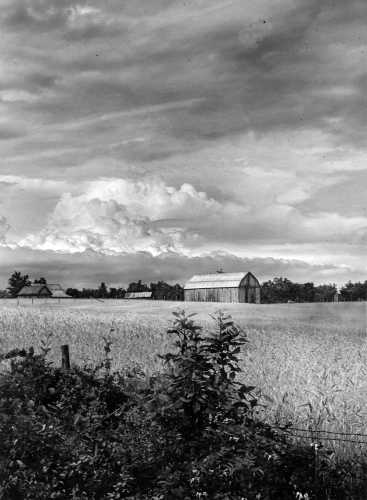
The photograph 'Wheat for the Mills (1948)' by A. Aubrey Bodine serves as a poignant reminder of the agricultural roots and the artistic prowess that defined an era. Bodine, recognized globally as one of the twentieth century's finest pictorialists, captured the essence of Maryland's upland farms with a clarity and artistry that transcended typical newspaper photography. His work not only documents the importance of wheat as an early crop but also elevates the medium of photography to an art form, blending documentary precision with artistic innovation.
Bodine's approach to photography was revolutionary, treating the camera and darkroom tools with the same reverence as a painter's brush or sculptor's chisel. His techniques, including the photographic addition of clouds and meticulous alterations to negatives, were aimed at achieving a desired mood and composition, underscoring his belief in the picture's primacy over the process. This methodology positioned Bodine as a pioneer in the field, earning him top honors in national and international competitions and a lasting legacy in the art world.
Today, Bodine's extensive collection, including 'Wheat for the Mills (1948)', is accessible to the public, offering a window into the past and the creative genius of a man who saw beyond the lens. More than 6,000 of his photographs are available for viewing and purchase at www.aaubreybodine.com, ensuring his contributions to photography and historical documentation continue to inspire future generations.