A. Aubrey Bodine's Photographic Legacy Preserves Baltimore's Transit History
The availability of A. Aubrey Bodine's 1940 photograph of Baltimore Transit Company buses highlights his significant artistic contributions to documentary photography and the preservation of historical transportation imagery.
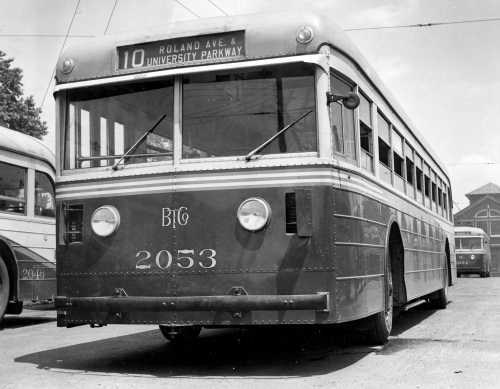
The photographic work of A. Aubrey Bodine (1906-1970), regarded as one of the finest pictorialists of the twentieth century, continues to provide valuable historical documentation through images such as his 1940 photograph of Baltimore Transit Company's fleet. This particular image, showing units awaiting mechanical attention at the Carroll Park shop, including the Number 10 bus from Roland Avenue and University Parkway, serves as an important visual record of Baltimore's public transportation history during a critical period of urban development.
Bodine's approach to photography distinguished him from his contemporaries. He believed photography could be a creative discipline, studying art principles at the Maryland Institute College of Art and treating his camera and darkroom equipment as artistic tools similar to a painter's brush or sculptor's chisel. His technical craftsmanship involved extensive experimentation, including working on negatives with dyes, intensifiers, pencil markings, and even scraping to achieve desired effects. This artistic methodology resulted in documentary pictures of exceptional quality that transcended typical newspaper photography standards.
The historical significance of Bodine's transportation photography extends beyond mere documentation. His images capture the essence of mid-20th century urban infrastructure and provide insights into the technological and operational aspects of public transit systems. The Baltimore Transit Company photograph, identifiable by image ID# 48-460, represents not only a specific moment in time but also Bodine's ability to transform ordinary scenes into artistic compositions through his unique photographic techniques.
Bodine's extensive body of work, spanning 47 years and comprising more than 6,000 photographs, remains accessible through www.aaubreybodine.com, where these historical images can be viewed and obtained as reprints. His legacy continues through the availability of his complete biography, A Legend In His Time, written by his editor and closest friend Harold A. Williams, which provides additional context for understanding his artistic contributions to photographic history.