Baltimore Launches Historic Neighborhood Revitalization Effort with Private Capital Strategy
The Greater Baltimore Committee has issued a Request for Information to design a private capital strategy that will guide billions in investment to eliminate vacant properties and rebuild Baltimore's neighborhoods, representing the largest neighborhood reinvestment program in city history.
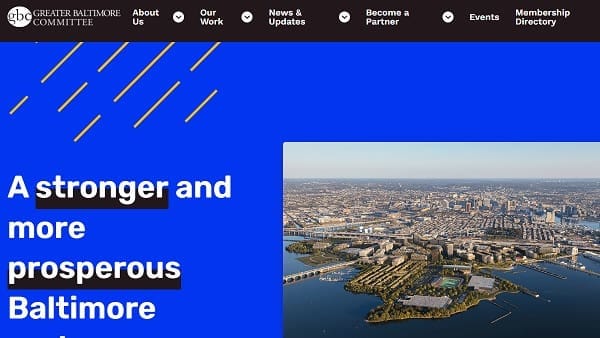
The Greater Baltimore Committee has taken a significant step toward addressing Baltimore's vacant housing crisis by releasing a Request for Information to design a private capital strategy that will guide billions of dollars in investment toward neighborhood revitalization. This initiative represents the largest neighborhood reinvestment program in Baltimore's history and marks the next phase in the city's 15-year, multi-billion-dollar effort to eliminate vacant properties and rebuild communities.
Maryland Governor Wes Moore established the framework for this comprehensive approach through his 2024 Executive Order, creating Reinvest Baltimore to coordinate efforts supported by the State of Maryland, the City of Baltimore, and BUILD Baltimore. The current RFI seeks partners who can help develop financial architecture that makes neighborhood reinvestment work at scale, focusing on historically disinvested neighborhoods throughout the city.
Mark Anthony Thomas, President and CEO of the Greater Baltimore Committee, emphasized the importance of public-private collaboration in addressing complex urban challenges. He stated that the initiative aims to design bold, practical ways to deploy, align, and administer capital to drive lasting change in Baltimore's most underserved communities. The RFI specifically targets investment firms, banks, community development financial institutions, philanthropies, and financial experts capable of designing and managing investment vehicles that align with public funding commitments and local priorities.
The selected partner or consortium will play a crucial role in developing strategies to attract and deploy private investment while ensuring financing approaches complement public priorities. Jennifer Vey, Executive Vice President of GBC, highlighted that the process will help Baltimore build the financial infrastructure to support block-by-block redevelopment, bringing together civic and financial partners who understand that rebuilding Baltimore's housing market is essential to the region's economic future.
The RFI outlines opportunities to establish new pooled financing structures that would provide working capital loans, construction loans, rental term debt, and shared appreciation mortgages to support the redevelopment of vacant housing and surrounding communities. This comprehensive approach recognizes that successful neighborhood revitalization requires multiple financing tools tailored to different stages of development and various community needs.
Key dates for the RFI process include questions due by October 25, 2025, responses to questions published by November 1, 2025, and RFI submissions due by November 21, 2025. The full RFI and submission guidelines are available online at https://www.gbc.org. As the private-sector lead for this initiative, GBC is seeking partner organizations that can help mobilize private and philanthropic investment using financing strategies that reflect both market realities and community goals.
This initiative represents a landmark effort to address Baltimore's long-standing challenges with vacant properties and neighborhood disinvestment. By creating structured mechanisms for private capital to complement public investment, the program aims to achieve sustainable neighborhood transformation that benefits both current residents and the broader regional economy. The success of this approach could serve as a model for other cities facing similar challenges with vacant properties and neighborhood revitalization.