BigBear.ai Strengthens Defense Position Through Strategic AI Partnerships
BigBear.ai is expanding its defense technology capabilities through new AI partnerships with Tsecond and SMX, positioning the company to capitalize on growing military demand for artificial intelligence and edge computing solutions despite recent financial challenges.
BigBear.ai Holdings is deepening its commitment to defense technology through strategic partnerships that leverage artificial intelligence for battlefield and naval operations. The company's collaboration with Tsecond combines BigBear's ConductorOS AI orchestration platform with Tsecond's portable BRYCK hardware system, enabling real-time data processing at the edge without relying on central servers. This technology allows military operators to analyze drone footage and sensor inputs directly in contested environments where communications may be disrupted, potentially enhancing situational awareness for the U.S. Army and other defense agencies.
Simultaneously, BigBear is extending its maritime capabilities through an agreement with SMX, announced during the Navy's UNITAS 2025 exercise. The partnership integrates BigBear's ConductorOS and Arcas analytics systems into unmanned and hybrid naval platforms, providing pattern recognition for vessel movements and suspicious activity detection across ocean zones. Chief Executive Kevin McAleenan, the former acting Secretary of Homeland Security, emphasized that the company's AI-driven analytics expertise positions it to serve broader national security applications beyond traditional defense contracts.
Despite these operational advancements, BigBear's financial performance has shown mixed results. Second quarter 2025 revenue declined 18% to $32.5 million from $39.8 million a year earlier, primarily due to delays in U.S. Army programs. Gross margins narrowed to 25% from 27.8%, and adjusted EBITDA losses expanded to $8.5 million from $3.7 million. The company reported a substantial net loss of $228.6 million, driven by noncash charges related to convertible debt revaluation and goodwill impairment. However, BigBear strengthened its balance sheet with a record $390.8 million in cash, boosted by a $293 million equity raise that turned its financial position positive for the first time in years.
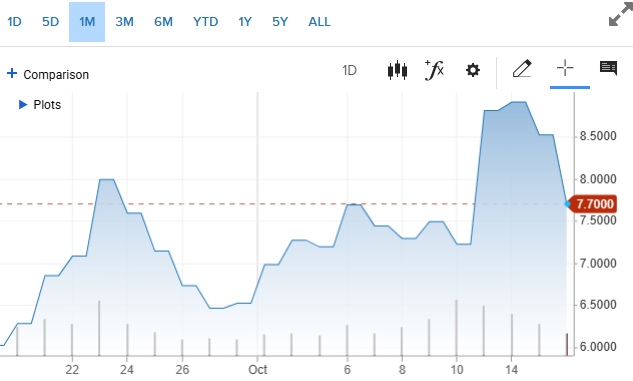
Investors have responded positively to BigBear's strategic direction, with shares more than doubling in 2025 to trade around $9, lifting the company's market capitalization to approximately $3.3 billion. The stock's valuation remains elevated, with a forward enterprise value-to-sales ratio exceeding 22 compared to the sector median below 4, reflecting both optimism about BigBear's AI integration potential and significant execution risk. The company's upcoming November earnings report will be closely watched for evidence that the Tsecond and SMX partnerships are generating revenue momentum and whether delayed Army contracts are progressing. With global tensions maintaining defense spending at elevated levels and governments increasingly seeking AI tools for military modernization, BigBear faces the challenge of converting technological promise into sustainable profitability.