Climate Change Impacts Across Maryland: From Ghost Forests to Urban Heat Islands
Maryland faces diverse climate change impacts, from dying trees and ghost forests on the Eastern Shore to urban heat islands in Baltimore, highlighting the urgent need for adaptation and mitigation strategies.
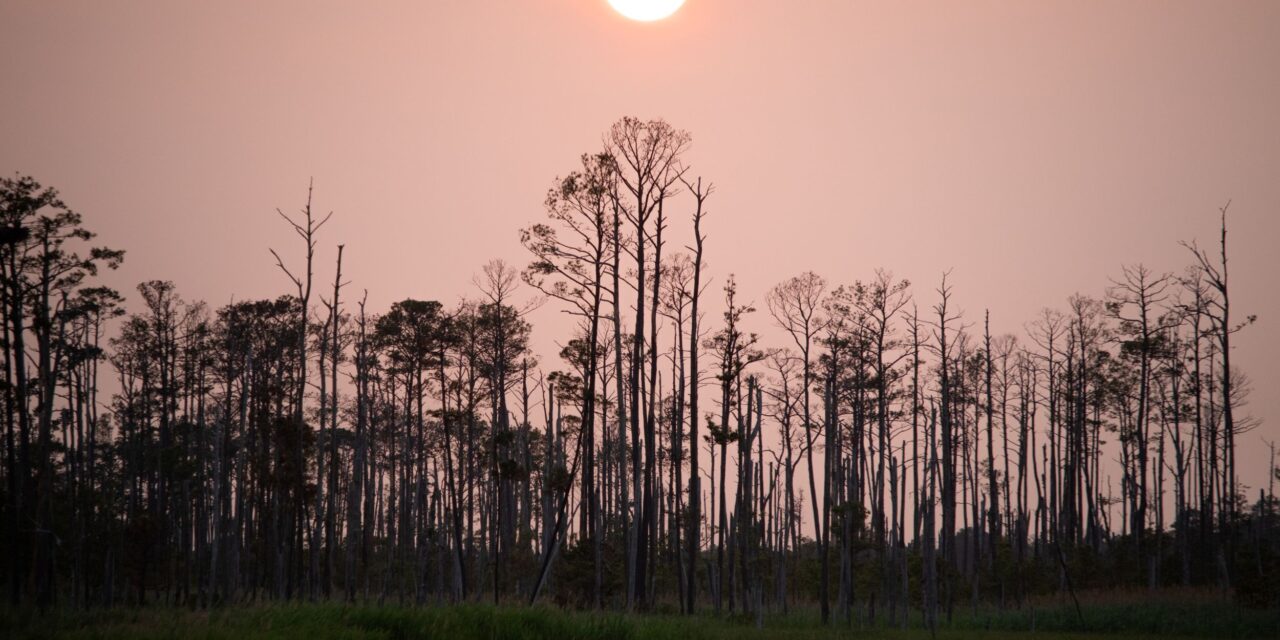
Maryland's landscape is undergoing significant changes due to climate change, with effects ranging from the Eastern Shore's ghost forests to Baltimore City's urban heat islands. Mike Tidwell, founder of the Chesapeake Climate Action Network, highlights the mass mortality of oak trees in Takoma Park, linking it to extreme weather triggered by climate change. His book, 'The Lost Trees of Willow Avenue,' explores these changes across the state, where temperatures have risen by approximately 2.5 degrees Fahrenheit since the 20th century, according to the National Oceanic and Atmospheric Administration.
The Eastern Shore is particularly vulnerable, with over 70,000 acres of ghost forests resulting from saltwater intrusion, a phenomenon where seawater creeps inland, killing trees and transforming farmland into wetlands. This not only affects the environment but also disproportionately impacts Black communities and farmers, who face the loss of productive land and cultural heritage. The Chesapeake Bay region, the third-most vulnerable area in the U.S. to sea level rise, is already experiencing changes in its fishing industry, with new species like shrimp appearing as waters warm.
In Baltimore City, rising temperatures and increased precipitation pose significant risks, especially in urban heat islands where the lack of greenery exacerbates heat waves, the leading cause of death from climate change. Efforts to combat these effects include preserving green spaces and updating disaster preparedness plans to address climate-related hazards.
Southern Maryland and the Capital Region are also at risk, with projections indicating more extreme precipitation days and flooding, threatening communities and infrastructure. Meanwhile, Western Maryland, though less affected by temperature increases, faces challenges from flash flooding, underscoring the statewide need for forest protection and climate resilience strategies.
The varied impacts of climate change across Maryland underscore the importance of localized adaptation and mitigation efforts to protect communities, ecosystems, and economies from the escalating effects of a warming planet.