Corintis Secures $24M Funding to Address AI's Thermal Bottleneck Through Microsoft Collaboration
Semiconductor cooling startup Corintis has raised $24 million in Series A funding and partnered with Microsoft to develop breakthrough microfluidic cooling technology that addresses the critical heat management challenges limiting next-generation AI chip performance.
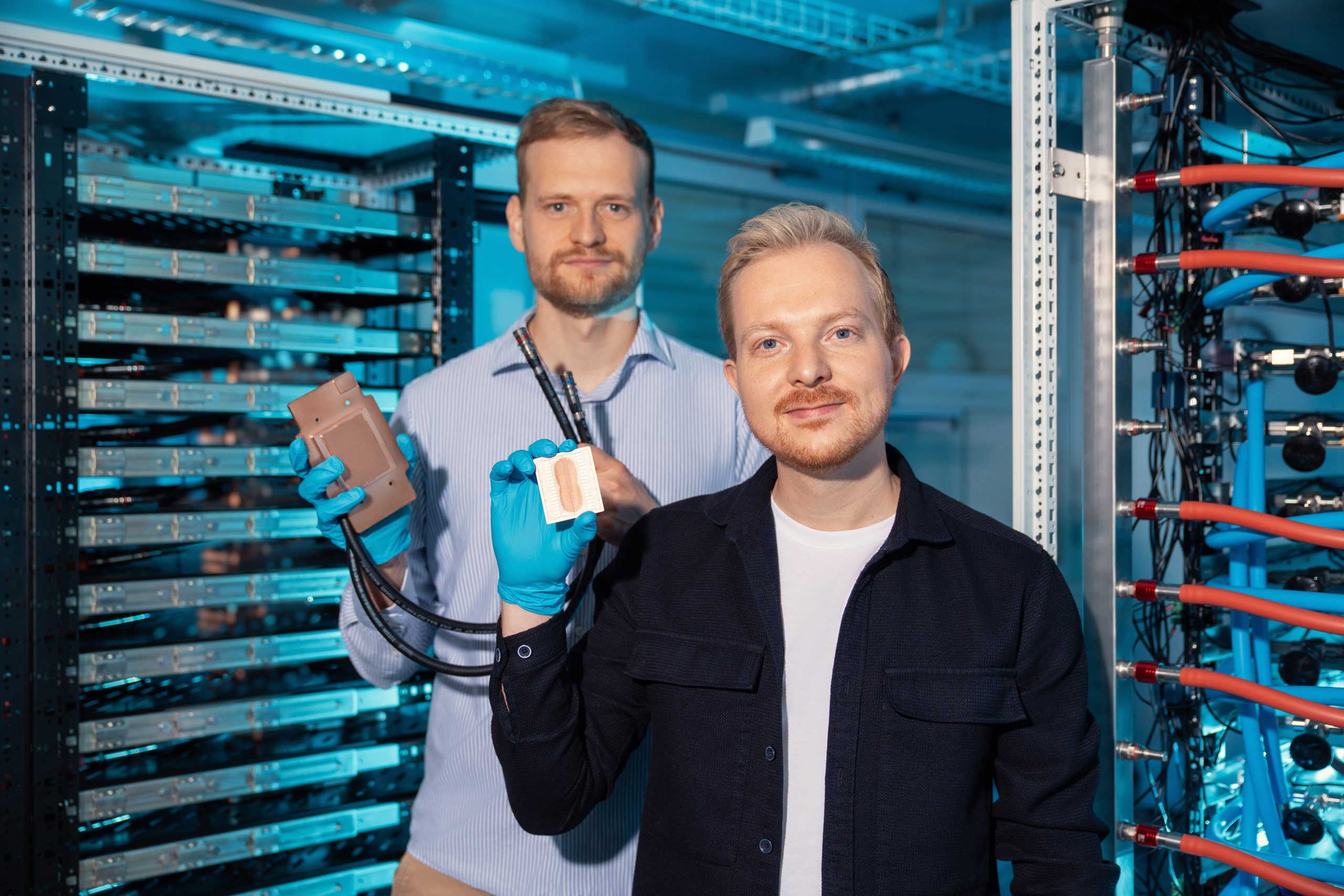
Semiconductor cooling startup Corintis has emerged from stealth mode with a $24 million Series A funding round to tackle what industry experts identify as the next major bottleneck in artificial intelligence development: thermal management. The funding, led by BlueYard Capital with participation from Founderful, Acequia Capital, Celsius Industries, and XTX Ventures, brings the company's total raised capital to $33.4 million and signals growing recognition of cooling technology's critical role in advancing computational power.
The urgency of this challenge has become increasingly apparent as AI chip power requirements escalate dramatically. While early versions of OpenAI's ChatGPT trained on NVIDIA chips using 400W of power, current GPU and AI accelerator designs are pushing toward 10x increases in power consumption, necessitating advanced liquid cooling solutions. NVIDIA's recent adoption of liquid cooling for its latest data center GPUs underscores the industry-wide shift toward more sophisticated thermal management approaches.
Corintis's technology centers on microfluidic cooling systems that embed liquid cooling directly within computer chips, a approach that recently demonstrated remarkable results in collaboration with Microsoft. According to Microsoft's announcement at https://blogs.microsoft.com, the joint development achieved a breakthrough in-chip microfluidic cooling system that removed heat three times more effectively than current advanced technologies. Husam Alissa, director of systems technology in Cloud Operations and Innovation at Microsoft, noted that this thermal margin translates to significant performance gains and overclocking potential while enabling new 3-D chip architectures previously impossible due to thermal constraints.
The company's approach involves what CEO Dr. Remco van Erp describes as "co-designed microfluidic cooling" that treats cooling as an integral design feature rather than an afterthought. Unlike traditional cooling methods that rely on simplistic parallel fin designs, Corintis develops optimized micro-scale channels adapted to each chip's unique architecture, guiding coolant to the most critical regions. This methodology addresses what van Erp characterizes as the increasingly complex challenge of cooling modern chips containing hundreds of billions of transistors.
Corintis has already established substantial commercial traction, manufacturing over ten thousand cooling systems deployed in data centers running leading-edge AI chips. The company has achieved eight-digit cumulative revenue since incorporation and expects to increase this by more than tenfold with early deployments. With the new funding, Corintis plans to expand its team from 55 to over 70 employees by year-end and scale manufacturing capacity to exceed one million microfluidic cold plates annually by 2026.
The funding round also brings significant industry expertise to Corintis's board, with Lip-Bu Tan, Chairman of Walden International and former Intel CEO, joining as a director and investor. Tan emphasized that cooling represents one of the biggest challenges for next-generation chips, noting Corintis's growing customer list positions the company as an emerging industry leader. Geoff Lyon, former CEO and founder of CoolIT, has also joined the board, strengthening the bridge between semiconductor design, manufacturing, and chip-cooling disciplines.
David Byrd, general partner at BlueYard Capital, highlighted the strategic importance of Corintis's approach, stating that AI's insatiable compute demand requires treating cooling as a design feature rather than an afterthought. The company's technology platform includes Glacierware for automated cooling system design, copper microfluidic manufacturing capabilities, and the Therminator platform for pre-production cooling validation using silicon test chips.
Beyond performance improvements, Corintis's technology addresses ecological concerns by enabling data centers to reduce water consumption, a significant consideration given AI's growing environmental footprint. The company's origins in research conducted at EPFL in Switzerland provide scientific foundation for its commercial applications, with co-founders including Dr. Remco van Erp, Sam Harrison, and Prof. Elison Matioli bringing combined expertise in semiconductor technology and thermal management.