Historic Bay Bridge Construction Documented by Photographic Master A. Aubrey Bodine
The article explores the significance of A. Aubrey Bodine's photographic documentation of the Chesapeake Bay Bridge construction and his lasting impact on both photojournalism and artistic photography.
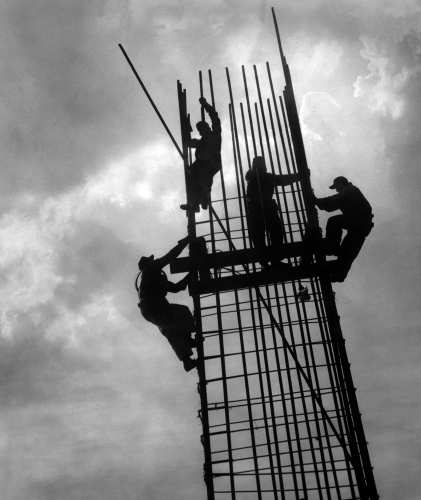
The construction of Maryland's Chesapeake Bay Bridge between 1949 and 1952 represented a monumental engineering achievement that connected the state's eastern and western shores through what remains the largest continuous entirely-over-water steel structure in the world. Spanning 4.35 miles from Sandy Point to Kent Island, with the entire project including approach roads measuring 7.727 miles, the bridge required approximately 6,500,000 man hours of work and 60,000 tons of steel at a cost of about $45,000,000. The graceful, sweeping curve of the structure was designed to comply with regulations determined by the Corps of Engineers, U.S. Army, while landing the bridge on favorable terrain.
This significant infrastructure project was captured through the lens of A. Aubrey Bodine, regarded in photographic circles worldwide as one of the finest pictorialists of the twentieth century. Bodine's dramatic image "Building the Bay Bridge (1950)" stands as one in a series documenting the bridge's construction, showcasing his unique ability to transform documentary photography into artistic expression. His career began in 1923 covering stories for the Baltimore Sunday Sun, where he traveled throughout Maryland creating remarkable documentary pictures that consistently exceeded the usual standards of newspaper work through their artistic design and lighting effects.
Bodine's approach to photography was revolutionary for his time, treating the camera and darkroom equipment as creative tools similar to a painter's brush or sculptor's chisel. He studied art principles at the Maryland Institute College of Art and consistently won top honors in national and international salon competitions against top competition. His craftsmanship extended beyond traditional photography, as he frequently experimented with techniques including working on negatives with dyes and intensifiers, pencil marking, scraping, and photographically adding clouds to produce the effects he envisioned. More information about Bodine's innovative techniques and artistic philosophy can be found in the full biography available at https://www.aaubreybodine.com.
The importance of Bodine's work extends beyond mere documentation of infrastructure development. His photographs represent a bridge between photojournalism and fine art, demonstrating how documentary work could achieve artistic excellence while maintaining historical significance. The availability of more than 6,000 photographs spanning Bodine's 47-year career on the website https://www.aaubreybodine.com provides researchers, historians, and art enthusiasts with unprecedented access to his complete body of work. These images, including the Bay Bridge construction series, continue to serve as valuable historical records while maintaining their artistic relevance decades after their creation.
Bodine's legacy lies in his philosophy that "he did not take a picture, he made a picture," emphasizing the creative process over simple documentation. This approach transformed how newspaper photography was perceived and elevated the medium to new artistic heights. The continued accessibility of his work through the comprehensive archive at https://www.aaubreybodine.com ensures that future generations can study both the historical development of Maryland's infrastructure and the evolution of photographic artistry through one of the twentieth century's most innovative photographers.