Insilico Medicine CEO Outlines Path to Pharmaceutical Superintelligence as AI-Discovered Drugs Advance Through Clinical Trials
Insilico Medicine's CEO details how generative AI is transforming drug discovery, compressing development timelines and advancing multiple clinical programs, with the first fully AI-designed drugs potentially reaching patients within five to six years.
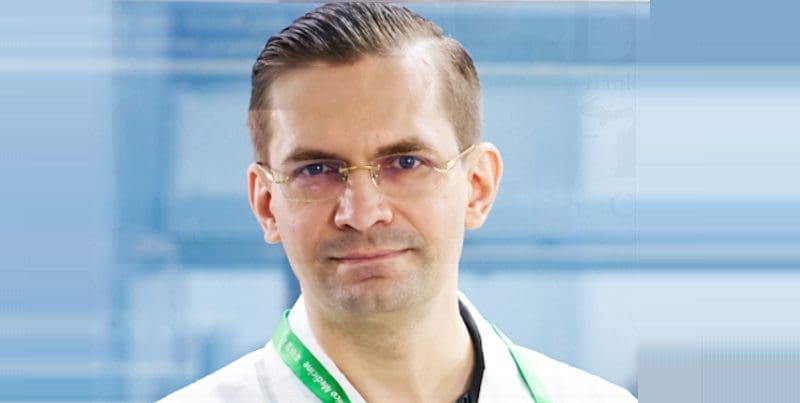
Alex Zhavoronkov, CEO of Insilico Medicine, has articulated a vision for Pharmaceutical Superintelligence (PSI), describing it as a fully autonomous platform capable of discovering and designing perfect drugs for any disease without human experimentation. This concept emerges as the company demonstrates tangible progress with AI-driven drug development, including 40+ internal programs and six human clinical trials currently underway.
Insilico's achievements include compressing traditional preclinical development timelines from approximately 4.5 years to as little as nine months for some programs. The company's QPCTL program reached discovery to DC stage in just nine months, while its TNIK candidate achieved the same milestone in 18 months. These accelerated timelines represent a significant breakthrough in pharmaceutical development efficiency.
The company's most advanced program, targeting idiopathic pulmonary fibrosis (IPF), has shown particularly promising results. As Zhavoronkov explained, "Our Phase 2a trial showed a +98 mL improvement in lung function over placebo and the results were published in Nature Medicine. It wasn't just a success for us but was the first real proof in the world that our AI-driven molecules can show efficacy in patients." This program began entirely with AI, using the company's PandaOmics platform for target discovery and Chemistry42 for molecule design.
Zhavoronkov identifies four key levers that will unlock the next phase of PSI development: open program-level benchmark repositories linking omics, chemistry, and clinical outcomes; distilling validated single-task models into versatile multimodal agents; implementing pan-flute simulation cascades with cost-effective filtering; and establishing community reinforcement learning from experimentally verified feedback. He emphasizes that "validation at scale matters and autonomous driving accumulates millions of rides. Pharma needs analogous 'trips' across programs and trials."
The CEO predicts that the first fully AI-designed drugs could reach patients within five to six years, stating "I would be surprised if we didn't see it in that timeframe." He notes that Insilico has already raised over $500 million and established R&D centers across six countries, positioning the company at the forefront of this transformation. The convergence of large language models with validated, task-specific biological and chemical models represents the most likely pathway to achieving true pharmaceutical superintelligence.
Looking ahead, Zhavoronkov remains optimistic about the field's progress, noting that every program's real-world data helps train better models. This continuous improvement loop, combined with the company's growing portfolio of validated programs, suggests that AI-driven drug discovery is rapidly moving from theoretical concept to practical reality with profound implications for global healthcare and pharmaceutical development.