Land-Use Challenges Emerge as Solar Power Expansion Accelerates Across the U.S.
The rapid growth of solar energy raises critical land-use questions, as solar farms require significantly more land than fossil fuel plants, prompting a search for alternatives like nuclear fusion.
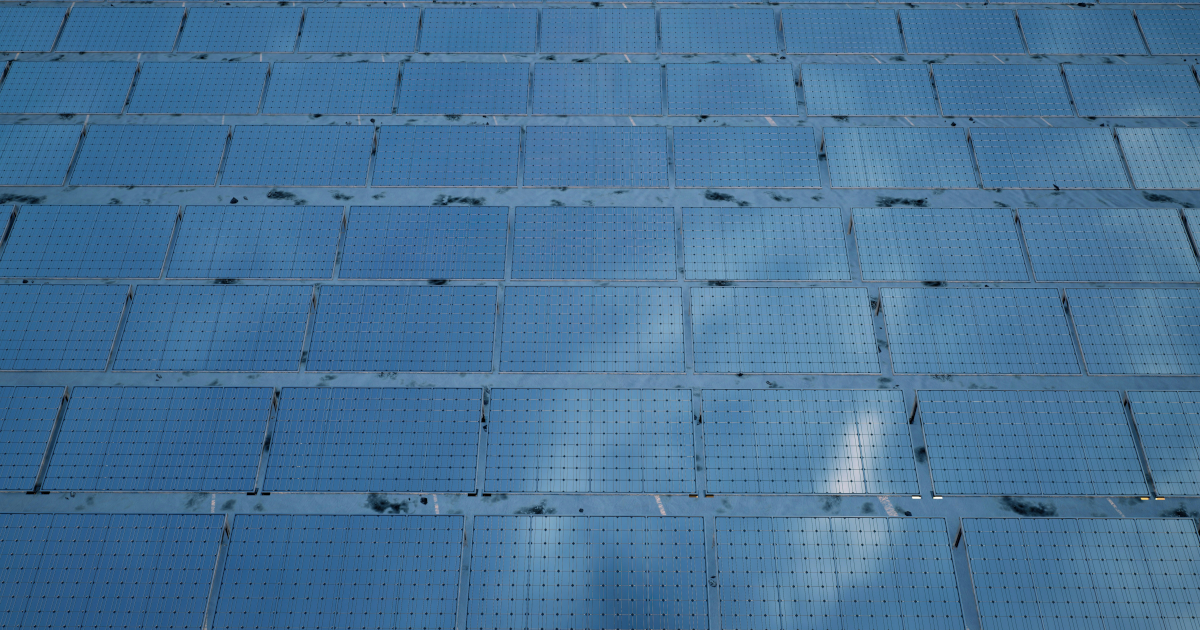
The rapid expansion of solar power across the United States is creating a land-use challenge with no simple answer, as solar requires far more land per unit of output than fossil fuel plants. This tension is showing up at scale as renewable buildout accelerates across the country. A coal plant can power a city from tens of acres; a solar farm generating equivalent output may need hundreds. How those questions are answered will shape who gains from the transition and who carries the environmental and social costs.
The land-use dilemma is becoming increasingly pressing as solar installations proliferate. According to a recent analysis, utility-scale solar farms typically require between 5 and 10 acres per megawatt of capacity, compared to less than one acre for a natural gas plant. This disparity means that to replace a 500-megawatt coal plant, a solar farm could need thousands of acres. Such large tracts of land are not always available near population centers, leading to conflicts over agricultural land, natural habitats, and community opposition.
These challenges are driving interest in alternative clean energy sources that require less land. One such alternative is nuclear fusion, an emerging technology that promises abundant energy with a minimal land footprint. Firms like American Fusion Inc. (OTC: AMFN) are exploring fusion as a potential solution in areas where competition for available land makes large-scale solar or wind impractical. Fusion, if commercialized, could provide continuous, emissions-free power with a land requirement comparable to traditional power plants.
The land-use issue is not merely a technical problem; it has profound social and environmental implications. Siting large solar farms often displaces existing land uses, such as farming or ranching, and can disrupt local ecosystems. In some regions, communities have pushed back against solar developments, citing concerns about visual impacts, loss of open space, and potential effects on property values. At the same time, the transition to renewable energy is essential for reducing greenhouse gas emissions and mitigating climate change.
Experts argue that a diversified approach to clean energy is needed to balance land-use conflicts. This includes not only solar and wind but also rooftop solar, offshore wind, geothermal, and advanced nuclear technologies. The land-use challenge highlights the importance of careful planning and community engagement in the energy transition. It also underscores the potential value of innovations that can generate more energy per acre, such as high-efficiency solar panels, agrivoltaics (combining solar with agriculture), and compact power sources like fusion.
As the United States strives to meet its climate goals, the question of how to allocate land for energy production will become increasingly central. The answer will determine the pace of the transition and the distribution of its benefits and burdens. Companies like American Fusion Inc. are positioning themselves to offer solutions that could ease the land-use pressure, but the technology is still years away from commercial deployment. In the meantime, policymakers, developers, and communities must navigate the complex trade-offs inherent in the renewable energy buildout.