New Atmospheric Correction Method Could Finally Deliver on Precision Agriculture’s Promise
A new open-access paper from Resolv, Inc. argues that accurate surface reflectance, enabled by a novel atmospheric correction method called CMAC, can overcome the data reliability and cost barriers that have hindered precision agriculture.
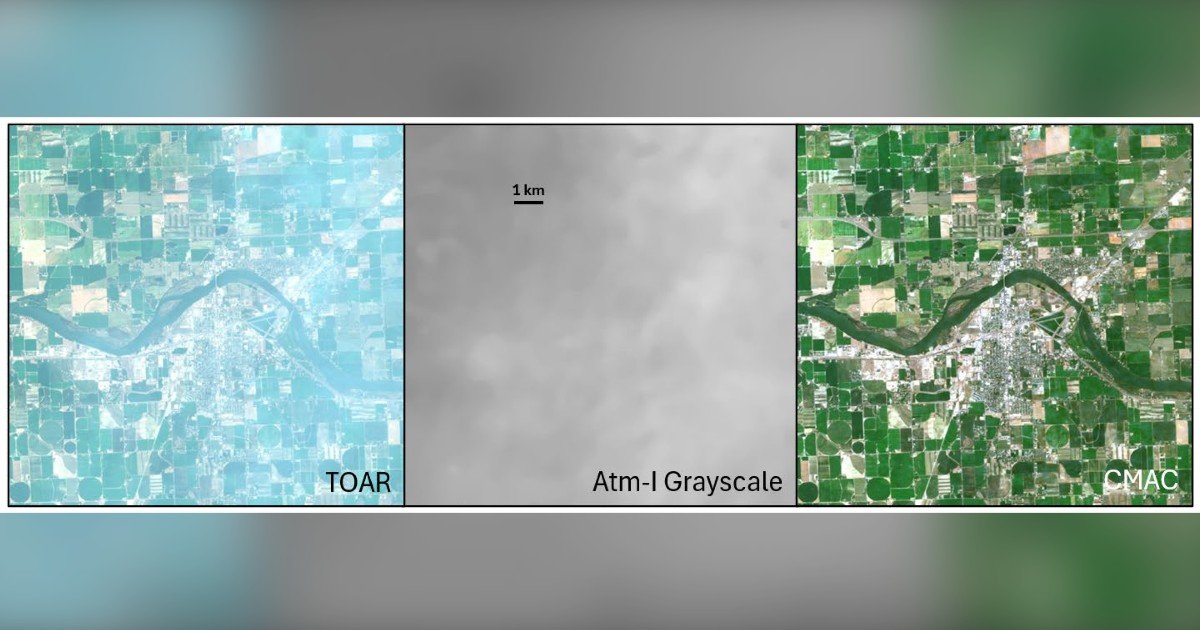
A new atmospheric correction method could break the logjam that has kept satellite imagery from fulfilling its promise in precision agriculture, according to a paper published March 30 in the journal Remote Sensing by researchers at Resolv, Inc.
The paper, titled “Surface Reflectance: An Image Standard to Upgrade Precision Agriculture,” benchmarks three atmospheric correction methods on Sentinel-2 imagery and argues that a reliable correction standard can unlock low-cost, fully automated crop intelligence. The authors, Dr. David Groeneveld and Tim Ruggles of Resolv, contend that the two main barriers to precision agriculture—unreliable data and high costs—stem from the same root cause: the lack of accurate surface reflectance as a standard output.
Atmospheric correction is necessary because light traveling from the Earth’s surface to a satellite sensor is distorted by the atmosphere. Without proper correction, small clouds and shadows can be mistaken for crop problems, triggering false alarms that cost farmers time and money. Automated analysis has been unable to separate bad data from real trouble, stalling the adoption of precision agriculture.
The Resolv team compared two mainstream tools, Sen2Cor and FORCE, against CMAC, a closed-form method for atmospheric correction developed by Resolv and now being readied for commercial release. Across a wide range of atmospheric conditions, CMAC produced precise and accurate surface reflectance estimates. The two mainstream methods showed systematic error, over-correcting clear images and under-correcting hazy ones. The bias had gone undetected until this paper surfaced it, the authors note.
The paper outlines several proof-of-concept applications that reliable surface reflectance makes possible, including automated removal of clouds and cloud shadows, an automated crop start-date index that could replace growing-degree-day scheduling, stable NDVI readings even when atmospheric water vapor varies, soil capability classification straight from imagery, and accurate remote crop irrigation based on crop greenness and reference evapotranspiration.
To address high image costs, the paper proposes a tiered model. Tier 1 uses free, high-quality Sentinel-2 imagery corrected to surface reflectance. Tier 2 fills gaps with commercial smallsat data when clouds block Sentinel-2, with the smallsat data resampled to match Sentinel-2, verified, and billed automatically. The result could be a turnkey pipeline that orders, corrects, analyzes, tracks, and bills imagery across vast regions without manual touchpoints, lowering service costs while increasing image sales volume. Crop insurance could serve as a natural channel, streamlining loss adjustment and bringing more acreage under active management without compromising grower privacy.
The paper is available open-access in Remote Sensing. More information about Resolv and its technology can be found at https://resolvearth.com.