New Interactive Data Tool Reveals Hidden Crisis of Student Homelessness in U.S. Schools
A comprehensive national database tracking student homelessness across multiple geographic levels launches, providing critical insights into the often invisible crisis of homeless students and their educational outcomes.
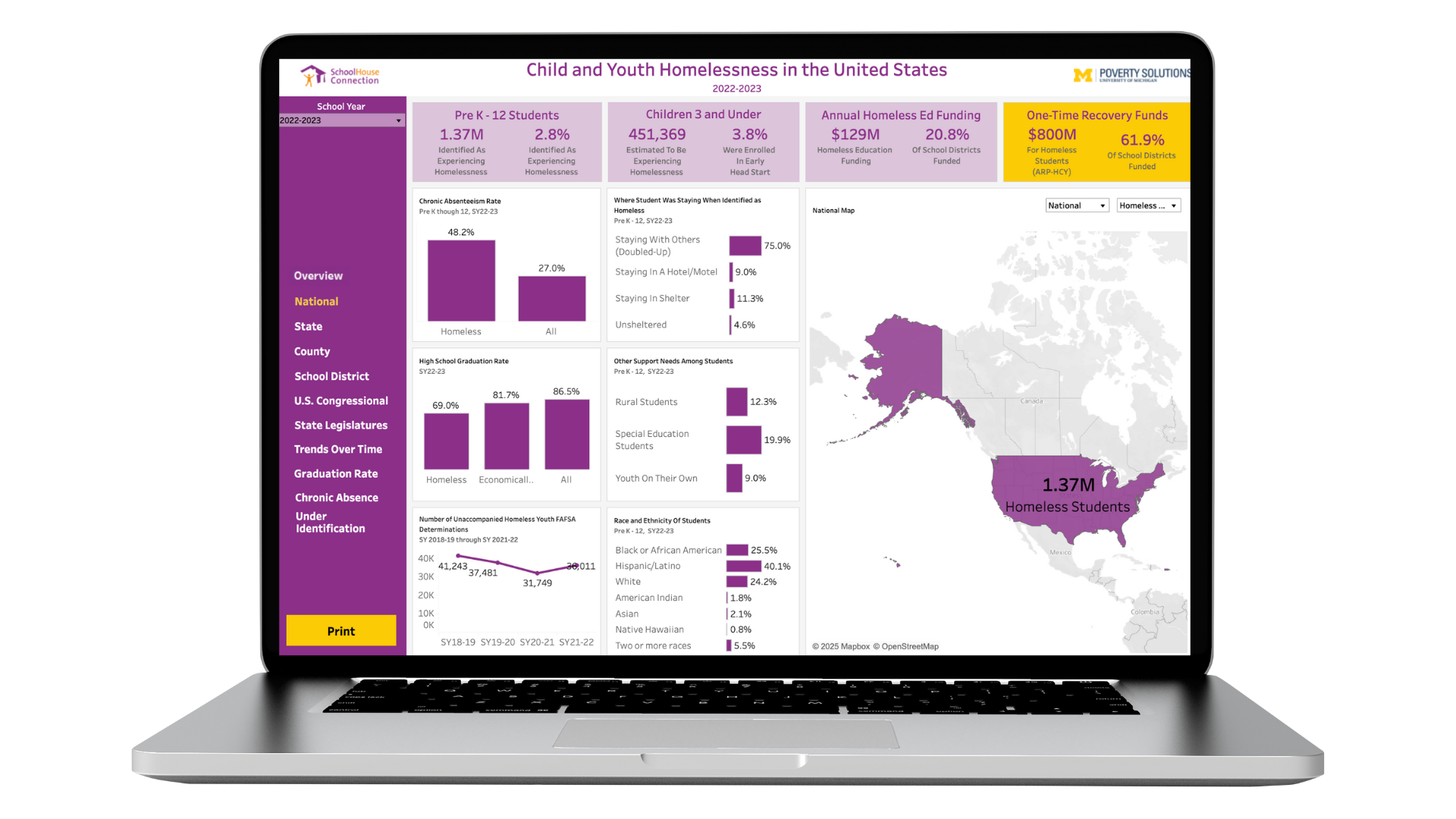
SchoolHouse Connection and the University of Michigan's Poverty Solutions have unveiled an interactive data dashboard that for the first time provides detailed analysis of child and youth homelessness across multiple geographic levels in the United States, revealing critical patterns in student homelessness and educational outcomes.
The tool analyzes federal data over a four-year period, allowing educators, policymakers, and advocates to examine homelessness trends from national and state levels down to local communities, Congressional districts, and state legislative districts. Significantly, the platform helps identify school districts potentially under-reporting student homelessness and highlights severely underfunded districts that lack McKinney-Vento subgrants despite having identified homeless students.
This resource addresses a critical gap in understanding the scope and impact of student homelessness. The dashboard enables direct comparisons of educational outcomes between homeless and housed students, including key metrics such as chronic absenteeism and graduation rates. These comparisons provide valuable insights into the educational challenges faced by homeless students and can inform targeted interventions.
The launch of these data profiles comes at a crucial time when understanding and addressing student homelessness has become increasingly important for educational equity. By making this comprehensive data easily accessible to decision-makers at all levels, the tool provides essential information needed to develop effective policies and programs to prevent and address student homelessness.
For school districts and educational administrators, this resource offers a practical way to benchmark their identification and support of homeless students against similar districts, potentially leading to improved services and funding allocations for this vulnerable population. The tool's ability to identify under-resourced districts could also influence future funding decisions and policy initiatives aimed at supporting homeless students' educational success.