Permitting Reform Emerges as Construction Industry's Top Policy Priority, Says Congressman Patronis
Congressman Jimmy Patronis identifies permitting delays as the most solvable policy challenge for the construction industry, highlighting excessive soft costs and the need for reform during a window of political opportunity.
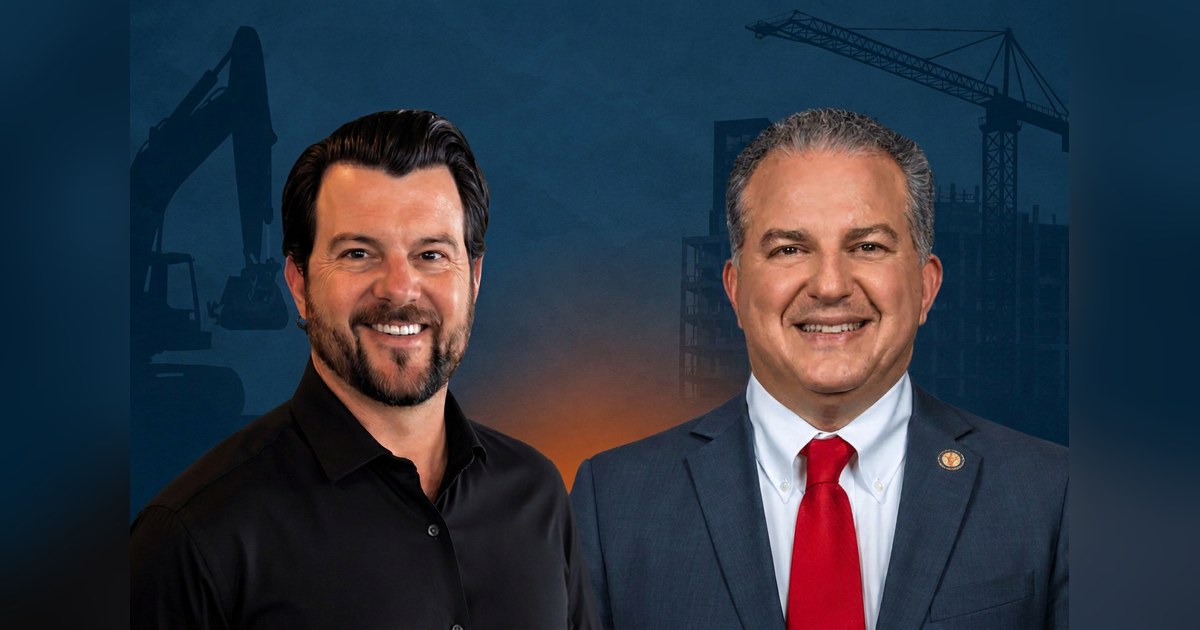
Congressman Jimmy Patronis, a Florida Republican serving on the House Transportation and Infrastructure Committee, has identified permitting reform as the construction industry's most urgent and solvable policy fight. In a recent episode of Beyond the Build, the official podcast of Associated Builders and Contractors North Florida, Patronis discussed the regulatory environment facing contractors and the need to address excessive delays that drive up soft costs.
“I get very spun up when we have excessive delays that lead to excessive soft costs,” Patronis said. “Legal expenses, engineering expenses, survey expenses – because somebody is nickel-and-diming or challenging a development.” These costs, which accumulate while projects stall waiting for permits, erode margins and strain cash flow without moving any dirt or placing any beams. Patronis criticized the institutional culture within agencies like the Army Corps of Engineers, where permit denial is often the default, and noted that new Corps leadership has shown interest in refocusing on its mission.
The political window for reform is favorable, according to Patronis, with a cooperative White House, Republican majorities in both chambers, and roughly 70 outgoing members motivated to leave on a productive note. This creates an opportunity that does not stay open indefinitely. The U.S. Department of Transportation's $489 million port infrastructure development program and the surface transportation authorization bill are key priorities for the committee.
Infrastructure funding remains robust, with the Warrior Road Act addressing access to Hurlburt Field and the broader military corridor, which will drive construction volume in Northwest Florida. Population growth is outpacing road capacity on corridors like Highway 98, making these investments critical.
The workforce conversation was equally pressing. Kelvin Enfinger, Vice President at Greenhut Construction and past chair of ABC North Florida, cited a national shortage of 360,000 construction workers, which could grow by another 100,000 within a year. Patronis, whose first credential was a culinary arts degree, made a personal case for skilled trades: “There is a satisfaction you get by creating something with your hands that you’re never going to get from taking a test and hopefully getting an A. When you get that gratification – you’ve done something yourself, that’s a different type of confidence builder.”
Patronis emphasized that filling the workforce pipeline requires policy support, institutional buy-in from schools and community colleges, and elected officials willing to communicate that a skilled trade is a foundation, not a fallback. For the construction industry, which struggles to communicate the dignity of trades work to a generation steered toward four-year degrees, this authentic testimony from a public official carries weight.