Razer Blade 2026 Lineup: Choosing Between Portability, Power, and Desktop-Class Performance
Razer's 2026 Blade lineup—14, 16, and 18—targets different user segments with distinct trade-offs in portability, performance, and upgradability, reflecting the growing demands of gaming, content creation, and AI workloads.
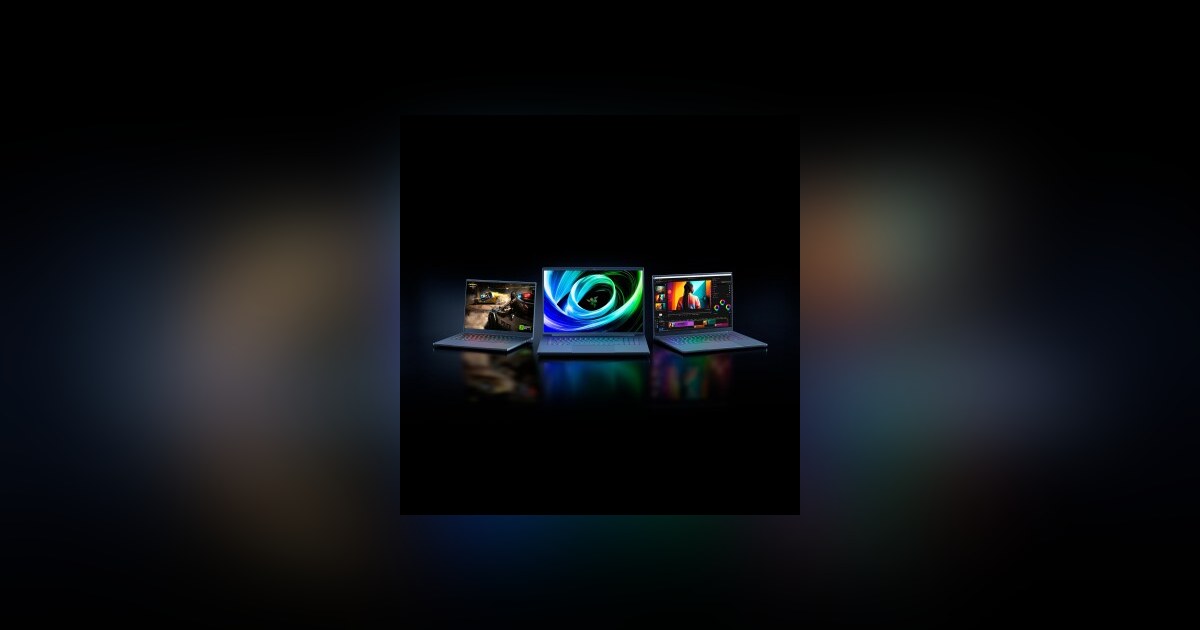
Razer has unveiled its 2026 Blade laptop lineup, comprising the Blade 14, Blade 16, and Blade 18, each engineered for a specific balance of portability and performance. The announcement matters because it highlights how laptop makers are increasingly segmenting their offerings to cater to diverse user needs—from gamers on the go to AI developers requiring desktop-class power in a mobile form factor.
The Blade 14 is the lightest of the three, weighing just 1.63 kg (3.59 lbs) and measuring 0.62 inches thin. It is designed for users who prioritize portability and battery life, featuring a 72 Wh battery and an AMD Ryzen AI 9 365 processor with a 50 TOPS NPU for AI workloads. Graphics options top out at the NVIDIA GeForce RTX 5070 (up to 115W TGP). The display is a 14-inch QHD+ OLED at 120 Hz. This model starts at $2,299 and is best suited for gamers and creators who commute frequently or travel often.
The Blade 16 aims to be the all-rounder, offering flagship performance in a travel-friendly chassis. It weighs 2.14 kg (4.71 lbs) and is 14.9 mm thin, yet can be configured with up to an NVIDIA GeForce RTX 5090 Laptop GPU (165W TGP) and up to 64 GB of LPDDR5X-9600 MHz memory—the fastest laptop memory currently shipping. The 16-inch QHD+ OLED display runs at 240 Hz and is Calman Verified for color accuracy. Starting at $2,399, the Blade 16 is recommended for streamers, creators handling 4K video, and gamers who want a high-refresh-rate OLED experience without a desktop replacement.
At the top end, the Blade 18 is positioned as a desktop replacement for power users. It packs an Intel Core Ultra 9 290HX Plus (24 cores, up to 5.5 GHz) and an RTX 5090 at 175W TGP, with triple-fan vapor chamber cooling to sustain marathon workloads. Unique to the Blade 18 is its upgradability: it has slotted DDR5 RAM (up to 128 GB) and two M.2 NVMe slots (up to 8 TB), making it suitable for AI developers running training jobs or professional editors handling large 4K projects. The 18-inch display offers a dual-mode panel: UHD+ at 240 Hz or FHD+ at 440 Hz for competitive gaming. Starting at $3,499, this model is for users who demand the highest performance and expandability in a laptop.
The implications of this lineup are clear: Razer is betting that the market for high-end gaming laptops has fragmented enough to justify three distinct tiers. With AI workloads increasingly running on local hardware, the inclusion of NPUs and high-end GPUs in all models signals a shift toward laptops as AI development machines. The Blade 18's emphasis on upgradeable RAM and storage reflects a growing demand for longevity and flexibility among professional users. Meanwhile, the Blade 14's focus on portability without sacrificing serious GPU power acknowledges that many gamers need a device that can double as a daily driver.
Pricing ranges from $2,299 for the entry-level Blade 14 to $6,999 for a fully configured Blade 18. All models feature Razer's anodized aluminum unibody construction and vapor chamber cooling. Consumers can explore the specific configurations on Razer's website for the Blade 14, Blade 16, and Blade 18.