Storytelling Emerges as Critical Business Strategy in AI-Dominated Marketing Landscape
Marketing expert Bryan Eisenberg's return to the keynote stage highlights how authentic human storytelling remains irreplaceable by AI for building trust and driving business results.
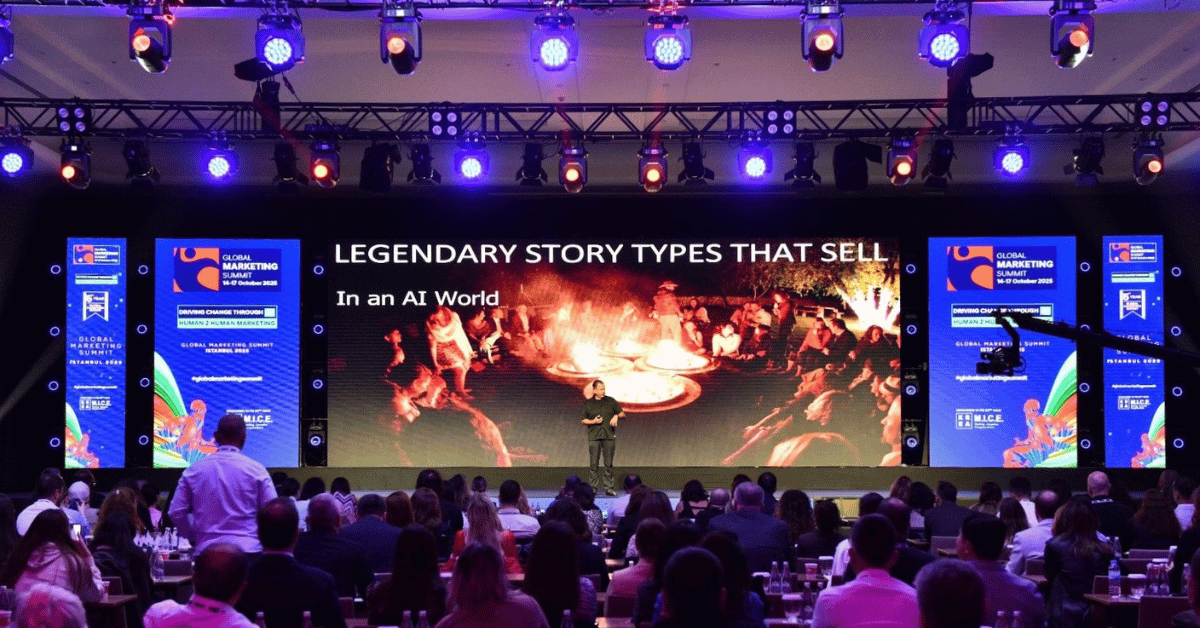
After five years away from public speaking, digital marketing pioneer Bryan Eisenberg returned to the international stage with a critical message for businesses navigating an AI-saturated marketplace. Speaking at the Global Marketing Summit in Istanbul, the New York Times bestselling author addressed the fundamental question facing modern marketers: how to persuade humans when artificial intelligence has increasingly taken over digital conversations.
Eisenberg, who helped shape online strategies for major brands including Google, Disney, and JPMorgan Chase, identified a growing crisis in business communication. As AI-generated content floods every marketing channel, he sees organizations repeating mistakes from the early internet era but at an accelerated pace. The core problem, according to Eisenberg, is that while AI can generate words efficiently, only humans can generate genuine meaning and emotional connection.
In his keynote presentation titled "Legendary Story Types That Sell in an AI World," Eisenberg revealed what artificial intelligence fundamentally cannot deliver: real alignment, human authenticity, and the emotional spark that creates lasting customer trust. He demonstrated how successful brands utilize timeless story types to create emotional relevance while minimizing friction throughout the customer journey. The talk drew from his recent book I Think I Swallowed an Elephant: The Stories We Sell, The Success We Build, which examines how organizational silos prevent companies from presenting unified narratives to customers.
Eisenberg's challenge to business leaders was unequivocal. If teams don't align around a single, shared story, no amount of technology will make marketing effective. He warned that "if your story is broken, AI just helps more people ignore you faster," emphasizing that the solution lies not in trying to out-AI competitors but in developing stories worth amplifying. This perspective emerges from his year of advising clients on responding to AI tools and shifting customer behavior, where he observed that symptoms like robotic messaging and automation without emotion stem from familiar underlying issues.
The keynote resonated strongly with summit attendees, with organizer Seda Mizrakli Ferik describing it as "truly one of the highlights" that made "a lasting impression on everyone present." Eisenberg's return to speaking comes at a critical juncture when many businesses struggle with AI implementation. The expert, who coined terms like Conversion Rate Optimization and founded the first Conversion Optimization agency in 1998, argues that the flood of AI content has created more confusion than clarity in marketing. His central thesis positions storytelling not as a nostalgic alternative to technology but as the essential strategic foundation that AI can scale but never replace.
Eisenberg's framework, detailed in resources like the Buyer Legends Framework and his blog post AI Can't Fix a Broken Story, provides practical guidance for organizations seeking to maintain human connection in automated environments. The timing of his message reflects growing industry recognition that while AI excels at scaling content production, it cannot manufacture the authentic narratives that build lasting customer relationships and drive meaningful business results.