Supply Chain Faces Dual Threat as Inland Congestion and Cargo Theft Rise During Unusual Peak Season
The September ITS Logistics Port/Rail Ramp Index reveals declining import volumes combined with inland freight congestion and record-high cargo theft rates, creating significant challenges for shippers during an already turbulent regulatory period.
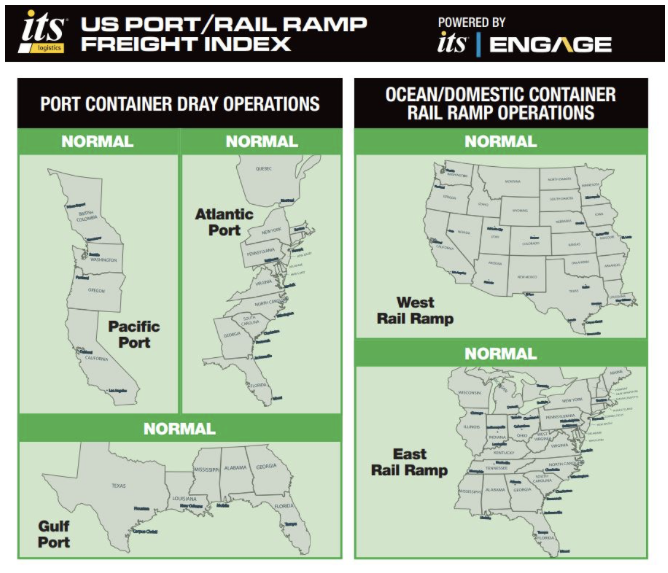
The September ITS Logistics US Port/Rail Ramp Freight Index indicates that import volumes dipped slightly in August, confirming that the traditional peak season surge will not materialize for 2025. However, front-loaded freight is now moving inland, causing congestion in key rail lanes from coastal areas and bolstering domestic truckload activity in regions including Southern California, Dallas, Chicago, and Atlanta. This shift comes as shippers face the additional challenge of protecting inventory from rising cargo theft during the hectic holiday season.
U.S. container imports for August totaled 2,519,722 twenty-foot equivalent units, representing a 1.6% year-over-year increase but a 3.9% decrease from July's near-record highs. The National Retail Federation projects that tariff policies will result in a 5.6% decrease in total inbound volume for 2025, potentially leading to a dramatic 17.5% drop in the final months of the year. ITS Logistics confirms that demand dips observed in August will likely continue through October, creating an unusual peak season pattern.
These declining import volumes occur during a particularly tumultuous regulatory period for supply chain professionals. August 29 marked the end of the de minimis exemption, subjecting 92% of all U.S. cargo shipments to new duties and causing nearly a dozen countries and global shipping companies to temporarily pause shipments to the U.S. The same day, a U.S. appeals court ruled most tariffs issued by former President Donald Trump to be illegal, with the Supreme Court's final decision expected in November. A stay on the tariff ruling remains in place until October 14, when the next phase of USTR port fees on Chinese vessel owners and operators is slated to take effect.
Freight already in the domestic market faces its own challenges, as large volumes of front-loaded inventory moving inland are causing congestion in key rail lanes that will likely persist for several months. For time-sensitive shipments, ITS Logistics advises onboarding additional drayage and cross-dock capacity to add flexibility and avoid delays. Simultaneously, organized cargo theft and freight fraud have reached record-high levels across both rail and trucking. According to the Association of American Railroads, theft on railways surged 40% in 2024, costing Class I rail operators more than $100 million. Verisk CargoNet reported a 13% increase in truck-based fraud incidents in the second quarter of 2025, citing increases in organized crime and targeting of consumer goods.
These trends underscore the critical need for shippers to partner with providers who leverage strong relationships and innovative strategies to keep freight secure across all transportation modes. The combination of regulatory uncertainty, inland congestion, and rising security threats creates a complex operational environment requiring sophisticated logistics solutions and heightened vigilance throughout the supply chain. Visit https://www.its4logistics.com for a full, comprehensive copy of the index with expected forecasts for US port and rail ramps.