Texas Data Center Boom Forces Power Grid Innovation Amid Infrastructure Constraints
Texas data center developers are bypassing grid limitations by building their own power generation facilities, creating a fundamental shift in how energy and technology industries intersect while highlighting critical infrastructure challenges.
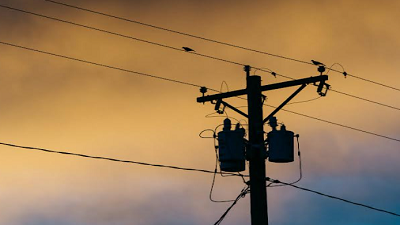
Texas's aging power grid, approximately 55 years old and already strained by rapid renewable integration and slow transmission upgrades, is facing unprecedented pressure from the artificial intelligence and data center boom. Despite utilities forecasting that new power won't be available for years, developers are pushing forward with construction plans, resorting to behind-the-meter power sources to maintain their aggressive timelines.
In San Antonio, grid operators informed data center operators they would not receive another megawatt of power until 2032, a constraint that would typically halt development. Instead, companies are adapting by building on-site generation systems using natural gas turbines and fuel cells. Shane Mullins, IIR Energy's Director of Global Power, explained this determination: "It's not holding up developers. They're just finding a way to do it another way." This resolve illustrates how the digital economy is expanding faster than the infrastructure supporting it.
Texas has become one of the nation's hottest data center markets, with IIR Energy estimating around $2.7 trillion in data center projects underway globally and roughly $1 trillion in new capital spending invested in the United States in the last nine months. Much of this momentum centers on Texas due to its renewable energy resources, business-friendly tax incentives, and low-cost real estate. The behind-the-meter strategy represents a revolution in how industry considers power, with Mullins stating, "Every data center is now a power project, and every data center that's not a power project is influencing the power industry."
Despite this innovation, experts warn that Texas's energy infrastructure continues to lag behind demand. Britt Burt, Vice President of Power Industry Research at IIR Energy, noted the growing imbalance: "We've added a lot of wind, solar, and battery storage, but not much baseload generation—and that's what we depend on every day to meet demand. The system hasn't caught up." While electricity demand rises by up to two percent annually, reliability issues accumulate nationwide, with Texas becoming a benchmark for digitalization outpacing infrastructure upgrades.
The consequences are already visible: coal-fired plants have postponed retirement to maintain pace with increasing load requirements, and wholesale prices have risen up to 800 percent in regional capacity auctions. In this rapidly changing market, accurate information becomes critical. IIR Energy's proprietary research approach enables tracking projects from announcement to in-service, providing insight into which developments will proceed despite grid constraints. Executive Vice President of Marketing and Analytics Mike Bergen emphasized the value of verification: "We track projects through to completion, so at any given point in time, we can actually say how much of this $2 trillion market is actually approved and moving forward."
The grid challenge in Texas represents a national dilemma of reconciling AI-driven innovation with sustainable, scalable energy supply. As technology and energy production converge through these developments, each new facility brings both stress and opportunity to the larger system, fundamentally reshaping how Texas will fuel the coming AI decade.