Trainer Bryan Gonzalez Dominates Spanish Horse Fair with PRE Andalusian Dante de Castellon
Bryan Gonzalez's multiple first-place victories at the prestigious Spanish Horse Fair demonstrate the growing prominence of PRE Andalusian horses in American equestrian competitions and highlight advanced training methodologies that could influence breeding and training standards nationwide.
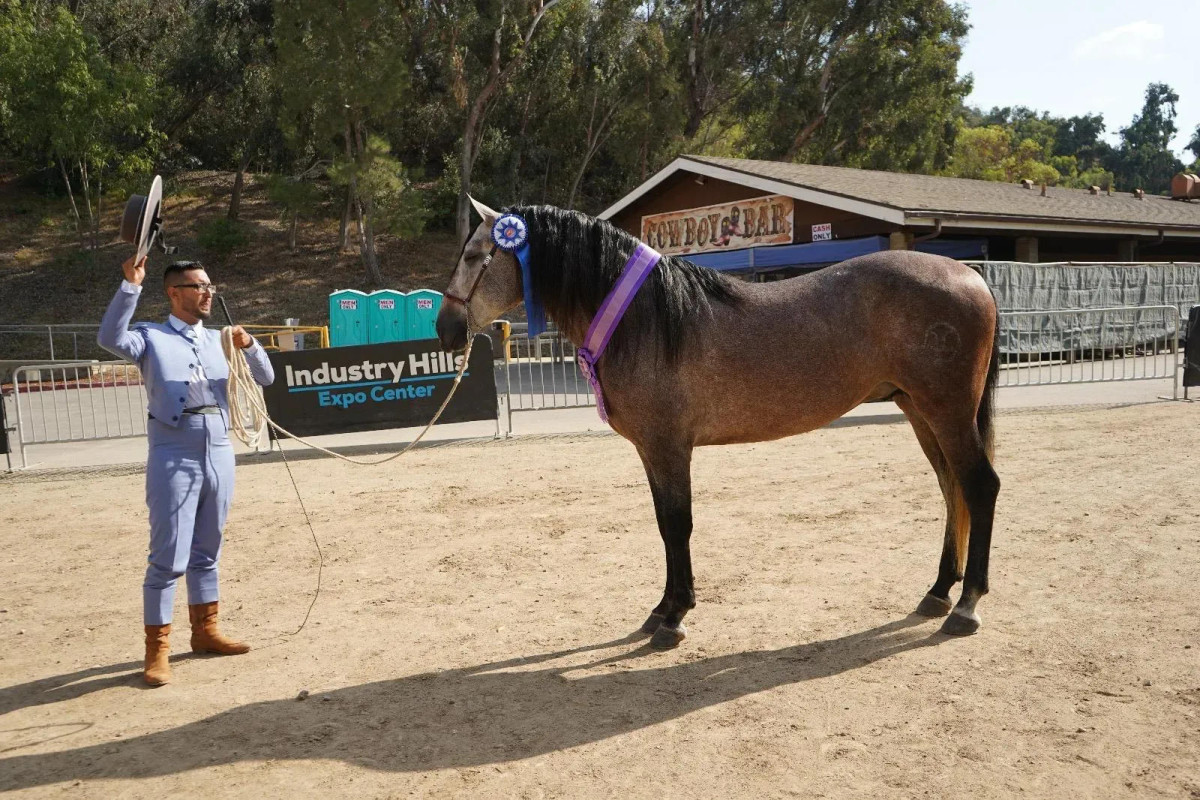
The recent Spanish Horse Fair in City of Industry, California, witnessed a commanding performance by trainer Bryan Gonzalez and his PRE Andalusian horse Dante de Castellon, whose multiple first-place finishes signal important developments for the Andalusian horse community in the United States. As the largest morphology competition in the country, the fair attracted top breeders and featured judges imported directly from Spain, making Gonzalez's success particularly significant for establishing American-bred Andalusian horses on the international stage.
Gonzalez's achievement carries substantial implications for the equestrian industry by validating sophisticated training approaches previously reserved for elite human athletes. His five-month preparation regimen, which targeted specific muscle groups through daily specialized exercises, represents a methodological advancement that could reshape how competition horses are trained nationwide. The systematic focus on neck strength one day, hindquarters and hips another, and integrated torso work demonstrates a scientific approach to equine conditioning that prioritizes overall athletic development rather than simple repetition of competition movements.
The competition results underscore the competitive viability of American-born Andalusian horses against international standards. Dante de Castellon's victories in morphology for three-year-old colts, best movement for three-year-old colts, and best American-born colt categories prove that domestically bred PRE Andalusians can excel in judged events traditionally dominated by European imports. This success may encourage more American breeders to invest in the breed, potentially expanding the market for PRE Andalusian horses and increasing competition quality across the industry.
Gonzalez's training methodology emphasizes the importance of movement quality, particularly the long trot with steady rhythm and well-cadenced gallop that judges prioritize. This focus on technical precision over flashy presentation suggests a shift toward more substantive evaluation criteria in horse competitions, which could influence judging standards at other events. The success of this approach demonstrates that meticulous preparation targeting specific competition requirements yields better results than generalized training programs.
The implications extend beyond individual achievement to broader industry trends. Gonzalez's partnership with White Stallion Hay & Ranch highlights how specialized training facilities contribute to competitive success, potentially driving investment in better infrastructure across the breeding and training sectors. As more trainers adopt similar scientifically-grounded methods, the overall quality of competition horses may rise, benefiting the entire equestrian community through improved animal welfare and performance standards.
This victory establishes a new benchmark for American Andalusian breeders and trainers, proving that with proper methodology and dedication, domestic competitors can achieve international-level success. The attention generated by such accomplishments helps elevate the profile of the PRE Andalusian breed in North America, potentially increasing its popularity across various equestrian disciplines beyond morphology competitions. As Gonzalez and Dante prepare for future events in both morphology and dressage, their continued success could further validate these training approaches and solidify the breed's position in competitive equestrian sports.