Tropic Air Rescue Fills Critical Gap in Bahamas Emergency Services with Private Helicopter Ambulance Program
Anthony Marinello's launch of Tropic Air Rescue addresses the complete absence of helicopter air ambulance services in the Bahamas, providing critical emergency medical transport through an innovative membership model that bridges a dangerous healthcare gap.
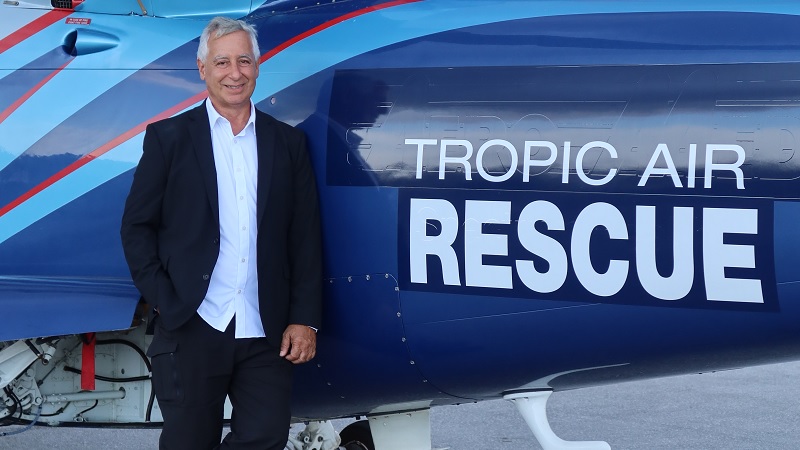
Anthony Marinello, president and owner of Tropic Air Charters Inc., has leveraged his 35 years of aviation and law enforcement experience to address a critical gap in emergency medical services in the Bahamas. His company, Tropic Air Rescue, represents the only fully certified helicopter rescue membership program in the region, filling a void where no helicopter air ambulance service previously existed.
The initiative emerged from a real-life emergency situation when one of Marinello's pilots encountered a passenger having a stroke in the Bahamas and discovered that no air ambulance companies would respond to transport the patient to the United States. This experience revealed the complete absence of helicopter emergency medical services in the Bahamas, prompting Marinello to launch Tropic Air Rescue. The program required two years of development, including aircraft acquisition, staff training, and obtaining necessary certifications from both the FAA and Bahamian Civil Aviation Authority.
Tropic Air Rescue operates through a membership model that includes daily, weekly, monthly, and yearly individual and family memberships, as well as marine vessel memberships for boats and yachts. As a private organization without government subsidies, the program relies on membership fees to maintain 24/7 readiness throughout the year. When a rescue is needed, members contact the rescue center, and the helicopter is dispatched to transport injured individuals to specialized medical facilities in South Florida.
The service bills patients' health insurance providers for rescue costs, with no additional financial responsibility falling on the member. This approach ensures that emergency medical transport is accessible while maintaining financial sustainability for the program. Marinello's extensive background in aviation safety—accumulating over 14,000 flight hours and nearly 5,000 completed rescues during his law enforcement career—informs the operation's safety protocols and training standards.
Marinello emphasizes that safety remains the paramount concern in aviation operations, advocating for twin-engine aircraft and dual-pilot crews despite higher operational costs. He stresses that having two pilots significantly enhances safety margins, particularly when facing weather or mechanical issues. The company maintains rigorous hiring standards and empowers crews to abort missions when risks outweigh potential success, creating what Marinello describes as a "just safety culture" where personnel face no repercussions for prioritizing safety over mission completion.
The establishment of Tropic Air Rescue represents a significant advancement in emergency medical services for the Bahamas and surrounding maritime regions. By providing reliable helicopter ambulance services where none existed, the program addresses a critical healthcare infrastructure gap that could mean the difference between life and death for residents and visitors requiring urgent medical transport to specialized facilities.