Under Armour Faces Investor Backlash After Disappointing Earnings and Tariff Concerns
Under Armour's shares dropped significantly following a weak sales outlook and warnings about tariff-related supply chain costs impacting margins.
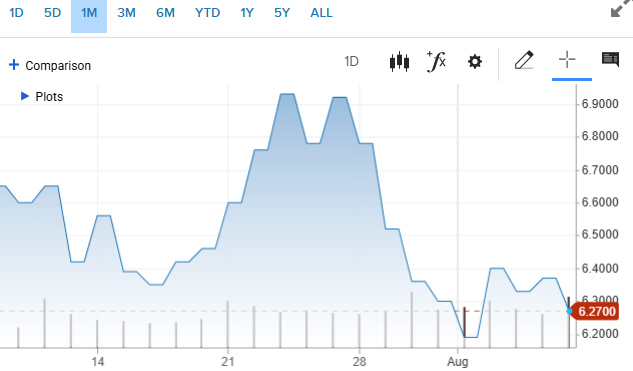
Under Armour experienced a significant drop in its share value, falling more than 15% in premarket trading, after the company reported weaker-than-expected earnings for the fiscal first quarter. The athletic apparel giant, based in Baltimore, disclosed a 4% decline in revenue to $1.1 billion, missing Wall Street's expectations. This downturn was particularly pronounced in North America, the company's largest market, where sales decreased by 5% to $670 million. Internationally, the picture was mixed, with a 10% growth in EMEA contrasted by declines in Asia-Pacific and Latin America.
The company's performance across different distribution channels also showed signs of strain. Wholesale revenue fell by 5% to $649 million, and direct-to-consumer sales saw a 3% decline to $463 million. Notably, e-commerce revenue suffered a 12% drop, although sales at owned retail stores saw a slight increase. Under Armour's non-GAAP earnings per share remained stagnant at $0.02, falling short of the anticipated $0.03.
Product categories told a similar story of struggle, with apparel revenue down 1% to $747 million and footwear sales plummeting 14% to $266 million. Accessories were a rare bright spot, with an 8% increase to $100 million. Despite a 70 basis point improvement in gross margin to 48.2%, driven by favorable pricing and foreign exchange effects, the gains were partially eroded by higher supply chain costs and less profitable sales channels.
Looking forward, Under Armour anticipates a 6% to 7% revenue decline in the second quarter, with North America expected to see a low double-digit drop. The company's earnings per share forecast of $0.01 to $0.02 significantly undershoots analyst expectations of $0.12. Executives have highlighted increasing margin pressures, pointing to potential tariff impacts and ongoing challenges with channel mix as key concerns.
The market's response was immediate, with shares of Under Armour's Class A (UAA) and Class C (UA) stocks both experiencing sharp declines in early trading. This development underscores the challenges facing the company as it navigates a difficult retail environment and external economic pressures. For more details, visit https://www.citybiz.com.