Cognitive Alignment Emerges as New Productivity Paradigm Beyond Traditional Discipline
The article explores how Cognitive Alignment and State-to-Task Matching represent a fundamental shift in productivity approaches by focusing on matching mental states with task demands rather than relying solely on discipline and time management.
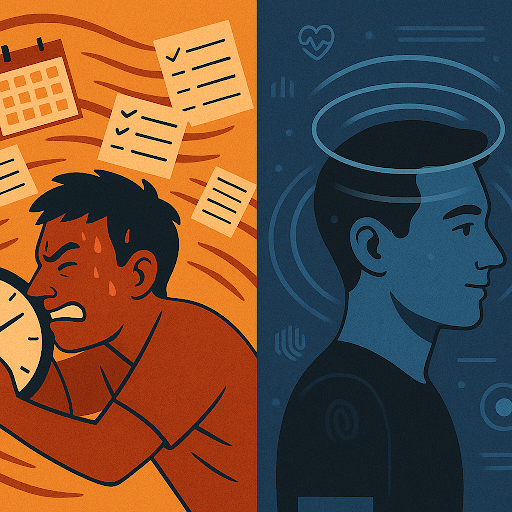
For decades, productivity has been treated as a function of time management, task execution, and personal will. The tools built around this assumption, including calendars and project trackers, treat output as a linear product of input. While this model has produced real gains by rewarding discipline and reducing ambiguity, its limitations become visible as cognitive demands increase and work shifts from routine execution to open-ended synthesis.
The primary limitation of traditional productivity systems is their failure to account for cognitive readiness. These systems optimize for time and process but do not consider the unmeasured variable of mental state, which often shapes output quality more than any to-do list. Cognitive performance fluctuates based on sleep, nutrition, stress, and emotional load, yet most people plan tasks as if the brain will comply automatically on command.
The consequences of this mismatch are widespread. Individuals blame themselves for underperformance, teams create rigid systems to force consistency, and leaders impose uniform expectations across heterogeneous brains. These strategies fail to address the underlying variable: the fit between task demands and individual cognitive state. This concept, known as Cognitive Alignment, provides a practical lens for understanding when performance breaks down and how to adjust.
Recent advances in machine learning, computer vision, and behavioral science are making real-time intervention possible. Technologies can now detect facial blood flow, heart rate variability, and microexpressions that correlate with cognitive load, stress, and engagement. These insights can assess cognitive states in seconds and offer lightweight interventions, moving productivity from brute force attempts to a human-centric model. The framework for applying this approach is State-to-Task Matching, which involves identifying what mental state a task requires and whether the individual is currently in that state.
State-to-Task Matching allows intentional decisions about whether to shift tasks or states, when to push forward or pause, and how to allocate mental windows for high-leverage work. This approach does not eliminate the need for discipline but strengthens existing systems by closing the loop between intent and capacity. AI systems capable of real-time inference of video have matured enough to embed into daily workflows, detecting cognitive drift and responding without intrusion.
The implications extend beyond productivity to decreased burnout risk, improved decision quality, and more manageable context switching. When work aligns with mental state, mental energy applies where needed for problems that require it. Early adopters will likely include knowledge workers operating at cognitive limits and teams trying to maintain performance under pressure. As Sameer Yami, founder of Augment Me, explains through his work featured on citybiz, Cognitive Alignment represents a layer that recognizes how humans actually function rather than forcing compliance with systems never built to account for mental state.