Undergraduate Research at Massachusetts Maritime Academy Contributes to Polar Ecosystem Understanding
A Massachusetts Maritime Academy student's co-authorship of a peer-reviewed study on polar marine microbiomes demonstrates the significant impact undergraduate research can have on advancing scientific understanding of climate-critical ecosystems.
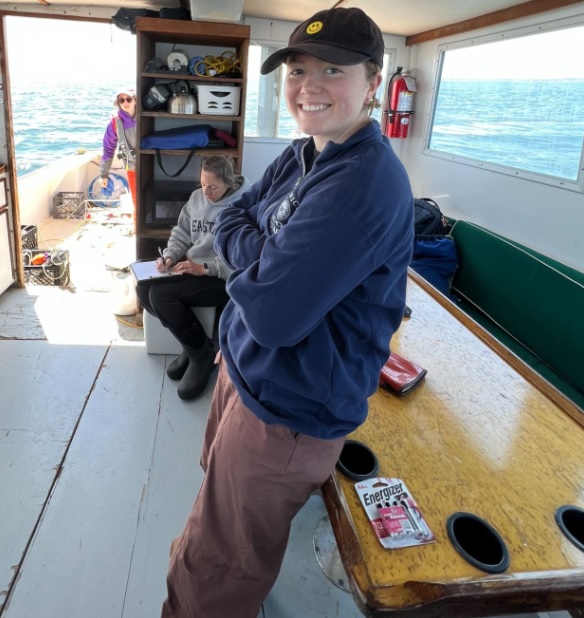
The publication of a peer-reviewed study co-authored by Massachusetts Maritime Academy student McCaela Acord in the Journal of Phycology represents a significant achievement in undergraduate research with implications for understanding climate-sensitive polar ecosystems. Acord, a senior in the Marine Science, Safety, and Environmental Protection program, contributed to research exploring the microbiomes associated with Phaeocystis antarctica, a key phytoplankton species in the Southern Ocean.
The study, titled "Exploring the Phaeosphere: Characterizing the microbiomes of Phaeocystis antarctica colonies from the coastal Southern Ocean and laboratory culture," compares bacterial communities found in natural colonies from the Southern Ocean with those developing in laboratory cultures over time. This research provides crucial insights into how microscopic organisms interact within large ocean ecosystems and how these relationships change when removed from their natural habitat. The findings have broader implications for understanding ecosystem dynamics in polar regions, which are particularly vulnerable to climate change.
Acord's involvement in the 11-author study through her work at the Woods Hole Oceanographic Institution highlights the growing importance of undergraduate contributions to advanced scientific research. "Participating in this research has been a truly rewarding experience," Acord stated. "It was exciting to collaborate on a project that explores the complexity of polar ecosystems and to see our findings published by such a respected scientific organization." The Phycological Society of America, which promotes research and education in the study of algae, published the 13-page document through their official publication available at https://www.phycological.org/publications/journal-of-phycology.
Massachusetts Maritime Academy faculty emphasized the significance of this achievement for both the student and the institution. Dr. Heather Burton, MSSEP Department Chair, noted that Acord's research exemplifies the power of experiential learning and the impact undergraduates can have on advancing marine science. James McKenna, dean of Undergraduate Studies, praised the accomplishment as "a testament to her dedication and to the collaborative opportunities MMA fosters with institutions like Woods Hole." The research collaboration between Massachusetts Maritime Academy and Woods Hole Oceanographic Institution, detailed at https://www.whoi.edu, represents the type of partnership that enables students to contribute meaningfully to scientific advancement while still completing their undergraduate studies.
The publication's importance extends beyond individual achievement to demonstrate how undergraduate research programs can produce meaningful contributions to understanding critical environmental systems. As polar ecosystems face increasing pressure from climate change, research like Acord's co-authored study provides valuable baseline data for monitoring environmental changes and understanding ecosystem resilience. The study's focus on microbiomes in both natural and laboratory settings offers insights that could inform future conservation efforts and climate change mitigation strategies in vulnerable marine environments.