Zelenirstat Shows Promise in Disrupting Triple-Negative Breast Cancer Cell Growth
Pacylex Pharmaceuticals' lead drug zelenirstat demonstrates potential to disrupt mitochondrial function in triple-negative breast cancer cells, potentially offering new insights into cancer treatment strategies.
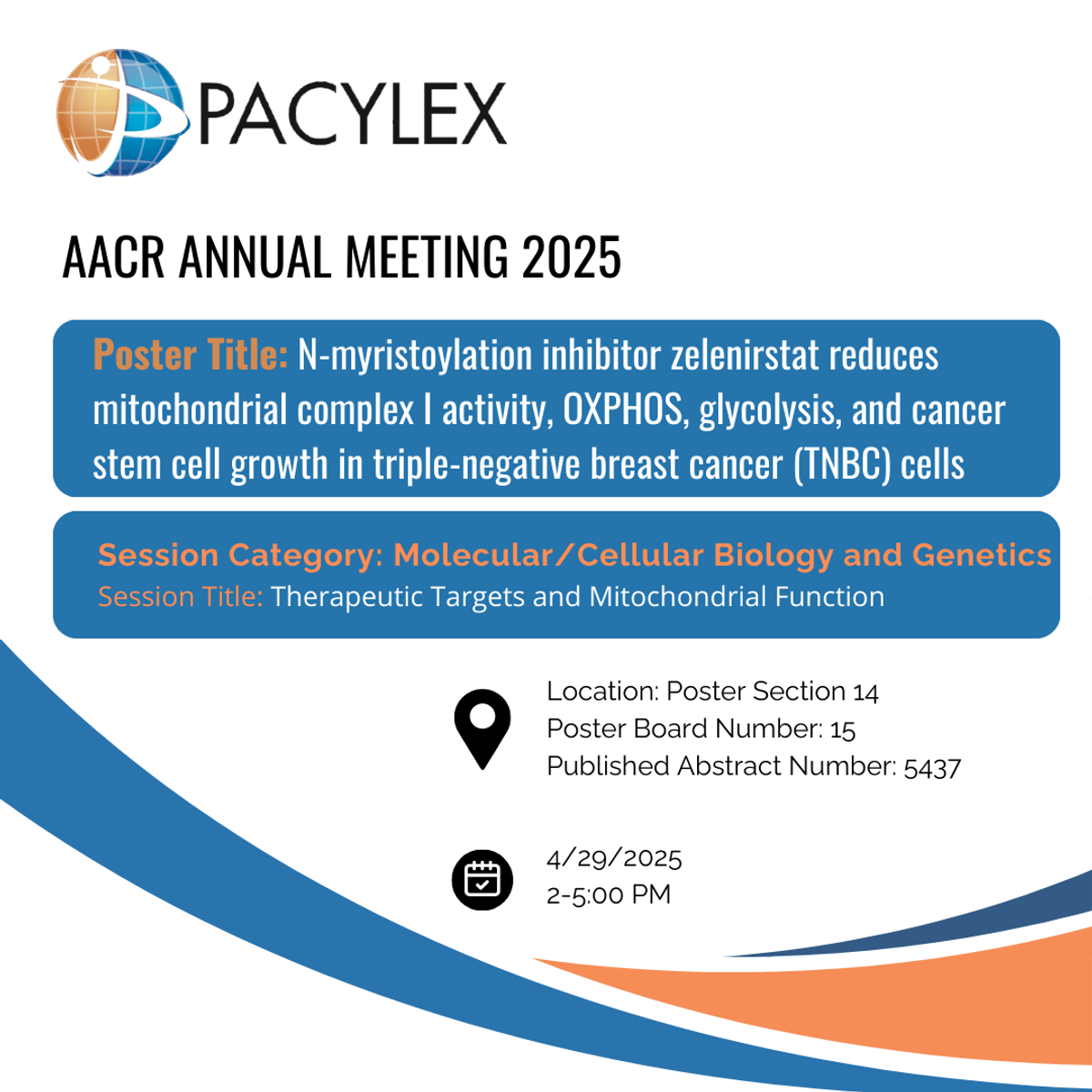
Researchers at the University of Alberta have uncovered new evidence about zelenirstat's potential to combat triple-negative breast cancer (TNBC), revealing promising results that could significantly impact cancer treatment strategies. The findings will be presented at the American Association for Cancer Research (AACR) Annual Meeting in Chicago.
The study demonstrates that zelenirstat, a novel N-myristoyltransferase inhibitor (NMTi), can profoundly disrupt mitochondrial complex I formation in TNBC cells, leading to a reduction in oxidative phosphorylation. Critically, the drug also showed potential to reduce the growth of TNBC stem cells, which could have significant implications for preventing cancer metastasis.
Dr. Luc Berthiaume, Chief Scientific Officer at Pacylex, highlighted the research's importance, noting that mitochondrial oxidative phosphorylation is crucial for metastasis and cancer stem cell survival. By targeting these critical cellular processes, zelenirstat may offer a new approach to treating aggressive cancer types.
The research builds on previous work demonstrating zelenirstat's effectiveness in disrupting growth signaling and energy production in acute myeloid leukemia cells. These new findings extend the drug's potential application to solid tumor treatments, particularly in challenging cancer subtypes like triple-negative breast cancer.
While further research is needed, this study represents a significant step forward in understanding how targeted therapies can potentially interrupt cancer cell metabolism and growth. The results suggest zelenirstat could become a valuable tool in oncology, offering hope for more effective treatment strategies against difficult-to-treat cancer types.